Moninder Singh Pandher Biography, Early Life, Career, Personal Life & Latest Events
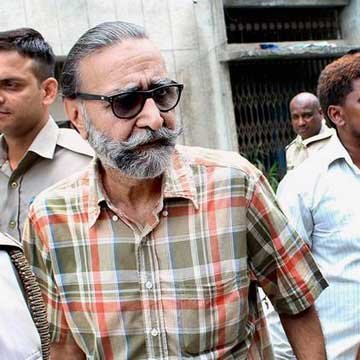
Moninder Singh Pandher Biography
Moninder Singh Pandher is a name permanently associated with one of the most disturbing and controversial criminal investigations in modern Indian history, the Nithari case.
For many years, the name Moninder Singh Pandher was linked in newspapers, television reports and public discussion to the discovery of human remains near his house in Noida in December 2006. He was arrested alongside his domestic worker, Surinder Koli, and became one of the principal accused in the Nithari investigations.
Yet Pandher’s biography is more complicated than the public image created during the height of the case.
Before Nithari became a national story, Pandher was a businessman from a comparatively affluent family with roots in the transport industry. He attended Bishop Cotton School in Shimla and later studied history at St. Stephen’s College in Delhi, according to biographical accounts published about him. He inherited a family transport business and later lived between Chandigarh and Noida.
His life changed completely after the investigation at his Noida property.
Pandher was convicted and sentenced to death in one of the Nithari cases, but that conviction was later overturned. In October 2023, the Allahabad High Court acquitted him in the two remaining Nithari cases against him, while also acquitting Surinder Koli in the cases before it. The court’s judgment raised serious concerns about the quality of the investigation and the evidentiary foundation of the prosecutions. The Supreme Court later dismissed the State’s appeals against those acquittals in July 2025, making the acquittals final.
As of September 2026, Pandher remains a free man. His name returned to national attention after the death of Surinder Koli in Haridwar on September 18, 2026. Recent reporting says Pandher has largely stayed out of public life since his acquittal, although he gave interviews following Koli’s final acquittal in 2025.
This biography examines Moninder Singh Pandher’s early life, education, family background, business career, marriage, life in Noida, the Nithari investigation, his arrest and conviction, his acquittal, and what is known about his life after release.
Who Is Moninder Singh Pandher?
Moninder Singh Pandher is an Indian businessman who became nationally known because of his prosecution in connection with the Nithari killings.
He owned the D-5 property in Sector 31, Noida, where Surinder Koli worked as a domestic employee. The property became the centre of the Nithari investigation after human remains were discovered in a drain behind the house in December 2006.
Pandher was subsequently arrested and prosecuted alongside Koli.
The distinction between accusation and conviction is particularly important in writing about him.
Pandher was accused of serious crimes, and a trial court convicted him in one Nithari case and imposed the death penalty. However, the Allahabad High Court later acquitted him in the remaining cases against him, and those acquittals ultimately became final.
Consequently, a contemporary biography should not describe Pandher as a convicted serial killer or murderer. The courts ultimately acquitted him.
Moninder Singh Pandher Early Life
Where Was Moninder Singh Pandher Born?
Public biographical accounts generally identify Moninder Singh Pandher as having been born in 1957 and raised in a prosperous Punjabi business family.
Different secondary accounts vary on certain biographical details, including the precise description of his birthplace. His family, however, was associated with Chandigarh and the transport business.
Pandher grew up in circumstances very different from those of Surinder Koli, who later became his domestic worker.
His family had substantial business interests, and the transport trade provided the foundation for the family’s wealth.
Moninder Singh Pandher’s Family Background
Pandher was born into a family headed by Sampooran Singh Pandher, a businessman involved in transport.
Accounts published after the Nithari investigation described the family as financially comfortable and socially established.
The family business reportedly operated a large fleet of trucks and had commercial connections extending beyond Chandigarh.
According to biographical reporting, Pandher eventually inherited the transport business from his father.
Some accounts have described disagreements within the family concerning property and inheritance after his father’s death. These accounts came primarily from media interviews with relatives and should therefore be understood as reported family disputes rather than independently established judicial findings.
What Was Moninder Singh Pandher Like as a Child?
Accounts of Pandher’s childhood vary.
Some relatives later portrayed his family environment as troubled, particularly after the death of his mother. Other people who knew him during his school years described him in much more ordinary terms.
An older profile published by Outlook reported that Pandher was educated at Bishop Cotton School in Shimla and that former classmates remembered him as an ordinary student rather than an obviously troubled or isolated figure.
This contrast is worth noting because later media coverage sometimes attempted to reconstruct his childhood through the lens of the Nithari case.
Historical biography requires caution in such situations. A person’s later notoriety should not automatically be projected backward onto childhood behaviour for which there is no reliable evidence.
Moninder Singh Pandher Education
Bishop Cotton School, Shimla
Pandher attended Bishop Cotton School in Shimla, one of the prominent schools in northern India.
According to published biographical accounts, he was part of the school’s 1973 class.
His education at an elite boarding school placed him in an environment quite different from the working-class world in which his future domestic employee, Surinder Koli, grew up.
St. Stephen’s College, Delhi
After school, Pandher attended St. Stephen’s College in Delhi.
Published accounts identify him as a history graduate, with graduation reported around 1977.
Studying history at one of Delhi’s most prominent colleges gave him a conventional elite educational background.
Unlike many people later associated with notorious criminal cases, Pandher did not enter public life through politics, entertainment or law. His professional identity was primarily connected with his family’s commercial interests.
Moninder Singh Pandher Career
The Pandher Family Transport Business
Pandher’s principal professional background was business.
After completing his education, he became involved in his father’s transport enterprise.
The family reportedly operated a substantial fleet of trucks, with business activity extending across northern India.
Pandher eventually inherited responsibility for the enterprise.
However, later accounts from relatives claimed that the business declined considerably under his management. One published profile alleged that the fleet fell from approximately 200 trucks to around 25.
That claim should be treated as a reported family assessment rather than a definitive financial record because comprehensive public company records establishing the exact size of the business over time are not readily available.
Moninder Pandher’s Business Life Before Nithari
Before 2006, there was little reason for the wider Indian public to know Pandher’s name.
He was essentially a private businessman.
His wealth allowed him to maintain homes in Chandigarh and Noida and to live a relatively comfortable lifestyle.
His private circumstances became relevant to the Nithari investigation because his Noida property was where Koli worked and where investigators focused much of their attention after the discovery of human remains.
Moninder Singh Pandher Wife and Family
Who Was Moninder Singh Pandher’s Wife?
Pandher was married to Devinder Kaur.
The couple had a son, Karandeep Singh Pandher, according to published biographical accounts.
The family’s domestic circumstances later attracted significant media attention because Pandher’s wife and son were reported to have spent considerable periods in Chandigarh while Pandher remained in Noida.
Why Did Pandher’s Family Live Separately?
Reports have stated that Pandher moved to Noida with his wife and son around 2001.
Later, his wife and son returned to Chandigarh.
Published accounts give different descriptions of the circumstances surrounding the family’s separation.
Some reports have linked it to family responsibilities and Pandher’s father’s health, while other accounts have described marital difficulties.
Because much of this information comes from relatives or media interviews rather than court findings, it should be treated as reported personal history rather than established fact.
What is clear is that Pandher spent substantial time at his Noida property while his immediate family was based in Chandigarh.
Moninder Singh Pandher and the D-5 House
When Did Pandher Buy the Noida House?
Pandher purchased the D-5 property in Sector 31, Noida, in the early 2000s.
Published investigations have placed the purchase around 2004.
The house became historically significant because it was located close to Nithari village, where numerous people were reported missing between 2005 and 2006.
Pandher employed Surinder Koli at the property.
Koli was responsible for domestic work, including cooking and other household duties.
The relationship between the property owner and his domestic worker would eventually become one of the central elements of the Nithari prosecution.
How Did Moninder Singh Pandher Become Connected to the Nithari Case?
The Nithari case began attracting major attention after children and young women from the surrounding area disappeared.
Families reported missing relatives, but according to later investigations and media reports, the police response was inadequate.
The situation changed dramatically in December 2006.
Human remains were discovered in a drain near Pandher’s house.
The discovery led investigators toward D-5 and the people connected with the property.
Pandher and Koli were arrested.
The case rapidly became a national scandal.
What Happened at Nithari in 2006?
The Nithari investigation concerned a series of disappearances and alleged killings involving children and young women.
The discovery of skeletal remains near D-5 suggested that the missing-person cases might be connected.
The investigation produced allegations of murder, rape and other serious crimes.
The media coverage was intense.
Pandher became one of the faces of the investigation because the property belonged to him.
However, the subsequent legal proceedings became much more complicated than the initial media narrative suggested.
Moninder Singh Pandher Arrest
Pandher was arrested in December 2006 during the investigation into the Nithari disappearances.
His domestic worker, Surinder Koli, was also arrested.
The Central Bureau of Investigation subsequently took over the investigation.
Investigators filed multiple cases relating to different alleged victims.
This meant that there was not one single Nithari trial. There were multiple prosecutions involving overlapping evidence and different charges.
That distinction is important when examining Pandher’s legal history.
What Was Moninder Singh Pandher Accused Of?
Pandher was accused in connection with several serious offences arising from the Nithari investigation.
The prosecution alleged that crimes had occurred at or around the D-5 property and that Pandher was connected to them.
Some media accounts made extremely graphic allegations against him.
However, the later judicial proceedings did not uphold those allegations as proven criminal guilt.
In October 2023, the Allahabad High Court acquitted Pandher in the two remaining Nithari cases before it.
The court also acquitted Koli in 12 cases.
The High Court’s reasoning included serious criticism of the investigation and concerns about the evidentiary foundation of the prosecutions.
Was Moninder Singh Pandher Sentenced to Death?
Yes.
Pandher was sentenced to death by a trial court in one of the Nithari cases.
That conviction became one of the most prominent aspects of the case because the Nithari investigation had produced enormous public outrage.
However, the death sentence did not become the final legal outcome.
The conviction was subsequently challenged.
The later proceedings ultimately resulted in Pandher’s acquittal.
Why Was Moninder Singh Pandher Acquitted?
The Allahabad High Court’s 2023 judgment was a major turning point.
The court examined the evidence presented against the accused and identified serious problems with the investigation.
Among the concerns was the prosecution’s reliance on evidence whose reliability and legal value were questioned.
The High Court also criticised the manner in which the investigation had been conducted.
The Supreme Court’s later judgment summarising the High Court proceedings noted that the High Court had described the investigation as “botched and shifting” and had recorded that important avenues of investigation had not been properly pursued.
The High Court also noted that a possible organ-trade angle mentioned by a Ministry of Women and Child Development committee had not been adequately investigated.
This did not establish an alternative perpetrator or prove an alternative explanation for the deaths.
Rather, it demonstrated that the prosecution had failed to build a sufficiently reliable case against the accused.
That distinction is essential.
An acquittal means the prosecution failed to prove guilt to the criminal standard. It does not necessarily answer every historical question surrounding an unsolved crime.
When Was Moninder Singh Pandher Acquitted?
The Allahabad High Court acquitted Pandher on October 16, 2023, in the two remaining Nithari cases against him.
The decision effectively ended his imprisonment in connection with the Nithari prosecutions.
Pandher was released from prison.
The acquittal was subsequently challenged by the State.
The matter therefore proceeded to the Supreme Court.
What Did the Supreme Court Say About Moninder Singh Pandher?
The Supreme Court later dismissed the State’s appeals against the Allahabad High Court’s acquittals.
The dismissal occurred on July 30, 2025.
The Supreme Court’s November 2025 curative judgment concerning Koli recorded that the acquittals entered by the Allahabad High Court on October 16, 2023 had therefore attained finality.
This is an important legal development.
It means Pandher’s acquittal was no longer simply an interim appellate result.
The acquittal became final after the State’s challenge failed.
Moninder Singh Pandher Life After Prison
Following his release, Pandher largely disappeared from public view.
Recent reports describe him as living in Chandigarh and maintaining a low public profile.
Unlike the period immediately following his arrest, there have been relatively few verified reports about his day-to-day life since his acquittal.
This lack of information is itself important.
A biography should not fill gaps in the historical record with speculation.
Where reliable public information ends, it is better to acknowledge the gap.
Moninder Singh Pandher Interview After Surinder Koli’s Acquittal
Pandher briefly returned to public attention in November 2025 after the Supreme Court granted Surinder Koli relief in the final Nithari case against him.
In an interview reported by Indian media, Pandher questioned the investigation and discussed his relationship with Koli and the D-5 property.
He also questioned who should ultimately be held responsible for the deaths associated with Nithari.
His comments represented his own account of events and should therefore be treated as statements by Pandher rather than independently established facts.
This interview was significant because it was one of the rare occasions after his acquittal when Pandher publicly discussed the case.
What Is Moninder Singh Pandher Doing Now?
As of September 2026, public information about Pandher’s current occupation and daily life is limited.
Recent reporting says he has remained largely inactive publicly since his acquittal.
There have been no reliable indications that he returned to the level of business activity associated with his family’s earlier transport enterprise.
He appears to have maintained a relatively private existence following his release.
Moninder Singh Pandher Latest News in 2026
The latest major development involving Pandher came indirectly through the death of Surinder Koli.
On September 18, 2026, Koli was reported dead in Haridwar.
Koli had been released from prison in November 2025 after the Supreme Court overturned the remaining conviction against him.
The news of his death revived public interest in the Nithari case and prompted renewed media attention on Pandher.
Recent reporting again identified Pandher as the former owner of the D-5 property and one of the principal accused in the original investigation.
However, it is important to remember that Pandher’s acquittal had already become final.
Is Moninder Singh Pandher Still in Prison?
No.
Moninder Singh Pandher has been free since his acquittal in October 2023.
The Allahabad High Court acquitted him in the two remaining Nithari cases against him, and the Supreme Court subsequently dismissed the appeals challenging those acquittals.
Therefore, he is not currently serving a prison sentence for the Nithari case.
Was Moninder Singh Pandher Really a Nithari Killer?
This question requires careful legal wording.
Pandher was accused of involvement in the Nithari crimes and was convicted in one case at the trial stage.
However, his conviction did not survive the appellate process.
The Allahabad High Court acquitted him, and that acquittal became final after the Supreme Court dismissed the State’s appeals.
Therefore, it would be legally inaccurate to describe Pandher today as a convicted Nithari murderer.
The more accurate description is that he was a principal accused in the Nithari investigation who was subsequently acquitted.
That distinction is not merely semantic.
It reflects the fundamental principle of criminal justice that guilt must be established beyond reasonable doubt.
Moninder Singh Pandher and Surinder Koli
The relationship between Pandher and Koli is central to understanding the Nithari story.
Pandher owned the Noida house.
Koli worked there as a domestic employee.
Their socioeconomic backgrounds were dramatically different.
Pandher came from an established business family and received an elite education.
Koli came from a poor rural background and had entered domestic employment after leaving school.
When the investigation began, both men became accused in the same broad criminal scandal.
For years, the public narrative often treated them as jointly responsible for the Nithari killings.
But the legal outcomes eventually changed that picture.
Pandher was acquitted in 2023.
Koli was acquitted in 12 cases in 2023 and received final relief in the remaining case in 2025.
The difference between the initial prosecution narrative and the final judicial outcome is one of the most important historical features of the Nithari case.
Why Is the Nithari Case Still Important?
The Nithari investigation remains significant because it raises questions that extend beyond the individual accused.
The case has been discussed in relation to police accountability, missing-person investigations, forensic science, confessions, circumstantial evidence and capital punishment.
It also raised questions about how poor families reporting missing children were treated by law enforcement.
The later judicial criticism of the investigation made the case particularly important from the perspective of criminal justice.
The Supreme Court’s 2025 judgment concerning Koli recorded the High Court’s criticism of investigative failures and noted that the State’s appeals against the 2023 acquittals had been dismissed.
The case therefore illustrates a fundamental lesson in criminal procedure.
A prosecution must be built on reliable evidence.
Public outrage cannot substitute for proof.
Moninder Singh Pandher Biography Timeline
1957: Birth
Moninder Singh Pandher was born into a prosperous Punjabi business family associated with Chandigarh and the transport industry.
1973: Bishop Cotton School
He was reportedly part of the Bishop Cotton School, Shimla, class of 1973.
1977: St. Stephen’s College
He completed a history degree at St. Stephen’s College in Delhi, according to published biographical accounts.
After College: Business Career
Pandher joined his family’s transport business and eventually inherited responsibility for the enterprise.
Early 2000s: Move Toward Noida
Pandher established a presence in Noida and later acquired the D-5 property in Sector 31.
2004: D-5 Property
The Noida house became his principal residence during the period leading up to the Nithari investigation.
2004: Surinder Koli
Koli began working as a domestic employee at the property.
2005 to 2006: Missing Persons
Several children and young women disappeared from the Nithari area.
December 2006: Discovery of Human Remains
Human remains were discovered in a drain near D-5, triggering the major investigation.
December 2006: Arrest
Pandher and Koli were arrested.
2007 Onward: CBI Investigation
The CBI investigated multiple cases connected to the disappearances.
2009: Death Sentence
Pandher was sentenced to death in one Nithari case by a trial court.
2023: Allahabad High Court Acquittal
The High Court acquitted Pandher in the two remaining Nithari cases against him.
2023: Release
Pandher was released from prison following the acquittals.
July 2025: Supreme Court
The Supreme Court dismissed the State’s appeals against the acquittals, making the 2023 acquittals final.
November 2025: Public Interview
Pandher spoke publicly about the Nithari case following the Supreme Court’s relief to Surinder Koli.
September 2026: Renewed Public Attention
Pandher again came into the news after reports of Surinder Koli’s death in Haridwar.
Frequently Asked Questions About Moninder Singh Pandher
1. Who is Moninder Singh Pandher?
Moninder Singh Pandher is an Indian businessman who became widely known after being arrested and prosecuted in connection with the Nithari killings in Noida. He was later acquitted by the Allahabad High Court, and the acquittal became final after the Supreme Court dismissed the State’s appeals.
2. What was Moninder Singh Pandher’s profession?
Pandher came from a family involved in the transport business. After completing his education, he joined the family enterprise and later inherited responsibility for the business.
3. Where did Moninder Singh Pandher study?
Published biographical accounts state that Pandher attended Bishop Cotton School in Shimla and later studied history at St. Stephen’s College in Delhi.
4. Who was Moninder Singh Pandher’s wife?
His wife has been identified in published biographical accounts as Devinder Kaur. They have a son, Karandeep Singh Pandher.
5. What happened to Moninder Singh Pandher in the Nithari case?
Pandher was arrested in December 2006 and prosecuted in connection with the Nithari killings. He was convicted and sentenced to death in one case, but his legal position later changed dramatically. The Allahabad High Court acquitted him in the two remaining cases against him in October 2023.
6. Is Moninder Singh Pandher still in jail?
No. Pandher was released following his October 2023 acquittal. The Supreme Court later dismissed the State’s appeals against the acquittals in July 2025, making them final.
7. Where is Moninder Singh Pandher now?
Public information about his current life is limited. Recent reports say he has largely remained out of the public eye since his acquittal and has been associated with his family home in Chandigarh.
8. Was Moninder Singh Pandher convicted of the Nithari murders?
He was convicted at the trial stage in one Nithari case and sentenced to death. However, that conviction did not remain in force. He was ultimately acquitted, and the acquittal became final after the Supreme Court dismissed the State’s appeals.
Final Perspective on Moninder Singh Pandher
The biography of Moninder Singh Pandher is ultimately a study in the difference between public reputation, accusation and judicial determination.
Before December 2006, Pandher was largely unknown outside his business and social circles. He had grown up in a relatively affluent family, attended prestigious educational institutions and entered the transport business inherited from his father.
The D-5 property in Noida changed everything.
The discovery of human remains near the house transformed Pandher from a private businessman into a nationally known accused person.
The prosecution that followed produced some of the most serious allegations ever associated with an Indian criminal investigation. Pandher spent years in custody and at one point faced the death penalty.
But the judicial story did not end there.
The Allahabad High Court examined the evidence and acquitted him. The court raised serious concerns about the investigation and the prosecution’s evidentiary foundation. The Supreme Court subsequently dismissed the State’s appeals, giving finality to those acquittals.
That final legal position is essential to any responsible biography.
Pandher may forever remain associated in public memory with the Nithari case, but the final court record must be distinguished from the allegations and headlines that surrounded the investigation.
His story also leaves a larger historical question.
The Nithari victims and their families remain at the centre of the tragedy. Several people disappeared, human remains were discovered and an enormous investigation followed. Yet after years of prosecutions, the convictions of the principal accused did not survive the later judicial scrutiny.
For historians, journalists and biography writers, that tension is precisely what makes the case significant.
It demonstrates why historical writing should preserve the facts of an investigation without confusing accusation with proof, and why the final judgment of a court must remain central when describing the life of a person who was prosecuted but ultimately acquitted.
As of September 2026, Moninder Singh Pandher remains legally acquitted of the Nithari charges against him and lives largely away from public attention. His name, however, remains permanently connected with one of the most consequential criminal investigations in India’s recent history.