Sardar Abdul Rehman Khetran Biography: Political Career, Balochistan Cabinet and Recent Controversy
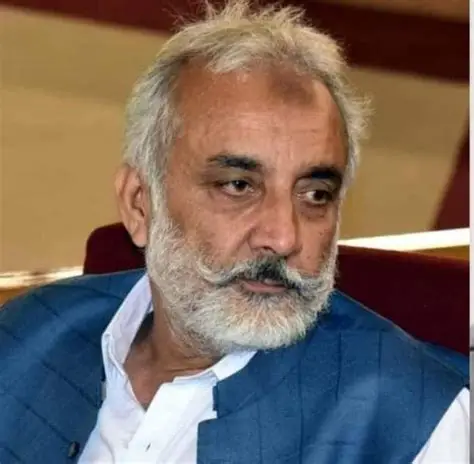
Sardar Abdul Rehman Khetran is a Pakistani politician and tribal leader from Balochistan whose career has involved provincial politics, ministerial appointments and debates over traditional tribal authority. His political position attracted renewed attention in 2026 after the provincial government removed him as Minister for Public Health Engineering in July.
On October 27, 2026, Khetran denied reports that a meeting with Balochistan Chief Minister Mir Sarfraz Bugti concerned his possible return to the provincial cabinet. He explained that the discussion focused on a proposal to abolish the Sardari system, which gives traditional tribal chiefs considerable social and political influence.
His career offers an insight into the relationship between electoral politics, tribal leadership and government in Balochistan.
Who Is Sardar Abdul Rehman Khetran?
Sardar Abdul Rehman Khetran is a Pakistani politician, member of the Balochistan Provincial Assembly and chief of the Khetran tribe. He represents the Barkhan constituency and has held several government positions during his political career.
He was born on December 20, 1958, in Barkhan District, Balochistan, Pakistan. His political background is closely connected to the Khetran tribe, whose traditional territory lies in eastern Balochistan.
Khetran belongs to a political environment where tribal relationships and local influence have historically shaped electoral contests. His position as a tribal chief has therefore remained an important part of his public identity.
Sardar Abdul Rehman Khetran’s Education and Early Background
Khetran completed his matriculation education. Publicly documented information about his early schooling and further academic qualifications remains limited.
Before becoming a prominent provincial politician, he was associated with the traditional leadership structure of the Khetran tribe. His tribal position gave him a recognised role in the local political environment, where influential families and tribal leaders have long participated in electoral competition.
Sardar Abdul Rehman Khetran’s Political Career
Khetran’s involvement in electoral politics dates back several decades. He has contested elections under different political affiliations, reflecting the changing alliances that have shaped Balochistan politics.
He was associated with the Jamhoori Wattan Party during the earlier part of his political career. He later became associated with the Pakistan Muslim League-Nawaz, Pakistan Muslim League-Quaid, Jamiat Ulema-e-Islam (F), Balochistan Awami Party and other political arrangements.
In the 2013 general election, he won a seat in the Balochistan Provincial Assembly from Barkhan as a candidate of Jamiat Ulema-e-Islam (F). His election gave him a place in provincial legislative politics and strengthened his public profile.
He contested the 2018 election as an independent candidate and secured another victory in Barkhan. He subsequently joined the Balochistan Awami Party, which became an important political platform for him during that period.
Khetran returned to the provincial assembly after the 2024 general election, representing PB-8 Barkhan. His political career has therefore included several assembly terms and ministerial responsibilities.
Ministerial Appointments in Balochistan
Khetran first entered the Balochistan provincial cabinet in September 2018 under Chief Minister Jam Kamal Khan. He received responsibility for Science and Information Technology.
In September 2019, he became Minister for Food and Population Welfare. He held the portfolio until August 2023, when the provincial government completed its term.
Following the 2024 general election, Khetran returned to the provincial cabinet on April 20, 2024, as Minister for Public Health Engineering.
The department oversees important public services connected to water supply, sanitation and related infrastructure. Its responsibilities are particularly significant in Balochistan, where many communities face challenges involving access to clean water and essential facilities.
His appointment gave him another opportunity to participate in provincial administration. However, his time in the cabinet ended in July 2026 when the provincial government removed him from the ministerial position.
Khetran continued to hold his seat in the provincial assembly after losing the cabinet portfolio.
Removal from the Balochistan Cabinet in 2026
Khetran’s removal as Minister for Public Health Engineering became a major development in his political career. The decision ended his latest ministerial appointment and raised questions about his position within the provincial government.
Although he lost the cabinet position, the removal did not automatically end his membership of the Balochistan Provincial Assembly. He remained a provincial legislator representing Barkhan.
His political activities continued after the change. On October 27, 2026, he addressed reports suggesting that he might return to the provincial cabinet following a meeting with Chief Minister Sarfraz Bugti.
Khetran rejected that interpretation. He said the meeting concerned consultations about a proposal to abolish the Sardari system rather than negotiations over a ministerial appointment.
The Sardari System Debate
The Sardari system has remained a significant political and social issue in Balochistan. It refers to a traditional structure of tribal leadership in which sardars exercise influence over their communities.
Supporters of efforts to abolish the system argue that traditional authority can undermine individual rights and the authority of state institutions when tribal leaders exercise powers outside the law. Others defend tribal leadership as part of the province’s historical and cultural structure.
Pakistan enacted the System of Sardari (Abolition) Act in 1976 to abolish the formal system. However, debates over its implementation and the continuing influence of traditional tribal leadership have persisted.
In October 2026, a resolution seeking the abolition of the Sardari system in Balochistan came before the provincial assembly. The Speaker disposed of the resolution after referring to the existing 1976 legislation and relevant judicial decisions.
The debate continued in November. On November 14, the provincial assembly rejected a separate resolution calling for effective and non-discriminatory implementation of the 1976 law. The vote ended with six members opposing the proposal and five supporting it.
Khetran’s October meeting with Bugti placed him in the middle of this wider political discussion, although he specifically denied that the meeting concerned a return to government.
The 2023 Barkhan Triple Murder Case
Another major controversy associated with Khetran emerged in February 2023, when the discovery of three bodies in Barkhan District attracted national attention.
The victims included a woman and two young boys. Reports linked the case to allegations involving a private detention facility associated with Khetran. He denied wrongdoing, and the allegations became the subject of police investigation and public debate.
The case generated widespread concern about security, justice and the treatment of vulnerable people in areas where traditional power structures remain influential.
It is important to distinguish allegations from established legal findings. The controversy became part of the public discussion surrounding Khetran, but reporting on the accusations should not be treated as proof of criminal guilt.
Sardar Abdul Rehman Khetran’s Political Position
Khetran’s career reflects the importance of tribal leadership and political alliances in Balochistan. He has served in several provincial cabinets, represented Barkhan in the provincial assembly and maintained a public role as chief of the Khetran tribe.
His removal from the cabinet in July 2026 changed his position within the provincial government, but his October statement showed that he remained involved in political consultations.
His future political influence will depend on his relationship with provincial political parties, his standing in Barkhan and developments within Balochistan’s wider political environment.
More in Public Figures
 Shehbaz Sharif Biography: Age, Political Career, Premiership and Leadership of Pakistan
 Usher’s Atlanta Mansion: Art Collection, Family Home and Luxury Lifestyle
 Chris Brown Biography, Age, Real Name, Children, Career, Songs and Net Worth
 Christina Haack Biography, Age, Husbands, Children and Net Worth