Shehbaz Sharif Biography: Age, Political Career, Premiership and Leadership of Pakistan
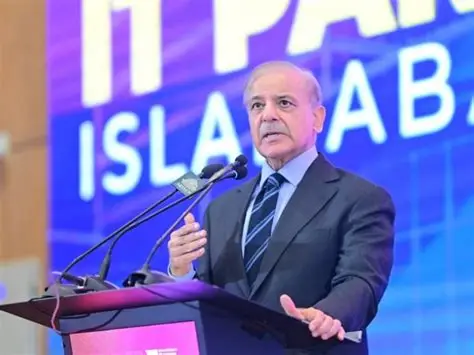
Muhammad Shehbaz Sharif has remained a central figure in Pakistan’s political and diplomatic affairs through his role as prime minister. His recent engagements have again brought him into the international spotlight. On November 12, 2026, he met Turkish President Recep Tayyip Erdoğan during the COP31 Leaders Summit in Antalya, where both leaders discussed trade, investment, defence, energy and regional cooperation. Two days later, he met Pakistani President Asif Ali Zardari in Lahore to discuss the country’s political, economic and security situation.
These engagements reflect the responsibilities of a politician whose career has moved from provincial administration to national leadership. Shehbaz Sharif built his reputation through several terms as chief minister of Punjab before becoming prime minister in 2022. He returned to the office in March 2024 after another general election.
Who Is Shehbaz Sharif?
Muhammad Shehbaz Sharif is a Pakistani politician and the country’s prime minister. Born on September 23, 1951, in Lahore, Punjab, he comes from the influential Sharif family, which has maintained a significant presence in Pakistan’s business and political life.
He is the younger brother of former Pakistani prime minister Nawaz Sharif. While Nawaz became one of the country’s most prominent national political leaders, Shehbaz developed much of his political identity through provincial administration in Punjab.
Shehbaz attended Government College in Lahore, where he graduated. Before entering active politics, he became involved in the family business and served as president of the Lahore Chamber of Commerce and Industry in 1985.
His experience in business introduced him to economic and industrial issues that later featured prominently in his political work.
Shehbaz Sharif’s Early Political Career
Shehbaz Sharif entered electoral politics in the late 1980s. He won a seat in the Punjab Provincial Assembly in 1988 and later entered the National Assembly in 1990.
He returned to the Punjab Assembly in 1993 and served as leader of the opposition from 1993 to 1996. This period helped him develop experience in legislative politics and opposition leadership.
In 1997, he won another provincial assembly election and became chief minister of Punjab. His first term placed him in charge of Pakistan’s most populous province, giving him responsibility for major public administration, infrastructure and development programmes.
His tenure ended in 1999 when General Pervez Musharraf overthrew the government in a military coup. The political change removed the Sharif family from power and forced Shehbaz and other members of the family into a period of political uncertainty.
Three Terms as Chief Minister of Punjab
Shehbaz Sharif’s provincial leadership remains one of the most important parts of his political career. He served as chief minister of Punjab three times, from 1997 to 1999, 2008 to 2013, and 2013 to 2018.
During his second and third terms, his administrations pursued major transport, energy, education, healthcare and technology projects.
One of the most visible initiatives was the Lahore Metrobus service, which introduced a dedicated rapid bus transport system to improve movement across the city. His governments also oversaw Metrobus developments in other cities, including Rawalpindi and Multan.
Another major infrastructure project was the Lahore Orange Line Metro Train. The project formed part of the China-Pakistan Economic Corridor and introduced an urban rail transport option for residents of Lahore.
His administrations also supported energy projects designed to increase electricity generation. These included power plants in Punjab and infrastructure associated with Pakistan’s wider energy development programme.
In education, his governments pursued initiatives aimed at improving school access and bringing out-of-school children into formal learning. Healthcare projects included the development of specialised medical facilities and the Pakistan Kidney and Liver Institute and Research Center in Lahore.
These projects helped establish his reputation as a politician who prioritised visible infrastructure and administrative delivery. However, large public projects also attracted debate about spending priorities, implementation and the long-term effectiveness of government investment.
Shehbaz Sharif as Leader of the Opposition
After completing his third term as Punjab chief minister in 2018, Shehbaz Sharif moved into national opposition politics.
He became leader of the opposition in Pakistan’s National Assembly, serving from 2018 until April 2022. During this period, he challenged the government led by Imran Khan and participated in parliamentary debates over economic management, governance and national policy.
He also served as president of the Pakistan Muslim League-Nawaz (PML-N), the political party associated with his family and its national political movement.
His experience as opposition leader prepared him for a larger political role when the country’s governing coalition changed in 2022.
Shehbaz Sharif’s First Premiership
Shehbaz Sharif became prime minister of Pakistan on April 11, 2022, after the National Assembly removed Imran Khan through a vote of no confidence.
He led a coalition government that included several political parties with different interests and priorities. The administration faced serious economic challenges, including inflation, pressure on foreign exchange reserves, public debt and the need for international financial support.
Pakistan also experienced devastating floods in 2022, which caused widespread destruction and increased pressure on public finances.
His government worked with international partners, including the International Monetary Fund, to address the country’s financial difficulties. It also pursued measures aimed at restoring economic stability and securing external financing.
His first term ended in August 2023 when the National Assembly was dissolved ahead of a general election. An interim administration took over during the election period.
Return to Power in 2024
Following Pakistan’s February 2024 general election, Shehbaz Sharif returned to the prime minister’s office. The National Assembly elected him on March 3, 2024, making this his second premiership.
His return placed him at the centre of another period of economic and political challenges. His government continued negotiations and policy measures aimed at stabilising the economy, improving revenue collection and attracting investment.
One of the major policy initiatives associated with his administration is URAAN Pakistan, a five-year development framework built around national economic transformation and priorities covering exports, digital development, environmental sustainability, energy and social equity.
His government has also pursued civil service reforms, tax administration changes and efforts to improve public-sector efficiency.
The country’s economic recovery remains a major test of his administration. Pakistan’s challenges include debt obligations, inflationary pressures, energy costs, employment needs and the task of sustaining growth.
Shehbaz Sharif’s Diplomatic Engagements
Foreign relations have become an important part of Shehbaz Sharif’s responsibilities as prime minister. Pakistan maintains strategic and economic relationships with countries across Asia, the Middle East and Europe, and his government has sought to strengthen these partnerships.
His November 12, 2026 meeting with Turkish President Recep Tayyip Erdoğan took place on the sidelines of the COP31 Leaders Summit in Antalya. Both leaders discussed ways to expand cooperation in trade, investment, defence, energy and connectivity. They also exchanged views on regional developments and diplomatic efforts to promote dialogue.
On November 14, 2026, President Asif Ali Zardari visited Shehbaz Sharif at his residence in Lahore. Their discussions covered Pakistan’s political, economic and security situation, cooperation among coalition partners and progress on public welfare programmes. Shehbaz also briefed Zardari on his recent visit to Türkiye and participation in COP31.
These meetings illustrate the domestic and international responsibilities attached to his office. They also show how his government uses diplomatic engagement to pursue economic cooperation and address regional concerns.
Shehbaz Sharif’s Family and Personal Life
Shehbaz Sharif belongs to the Sharif family, a prominent Pakistani business and political family. His father, Mian Muhammad Sharif, was a businessman who established the family’s industrial interests.
His elder brother, Nawaz Sharif, served three terms as Pakistan’s prime minister and remains one of the country’s most influential political figures. His nephew, Hamza Shehbaz, has also held political office in Punjab.
Shehbaz’s family background has shaped public discussion of the Sharif family’s influence in Pakistan’s politics and business sector. His political career has remained closely connected to the PML-N and the wider political network built by his family.
Outside politics, he has been described as an avid swimmer and cricket enthusiast.
Shehbaz Sharif’s Political Legacy
Shehbaz Sharif’s political career spans provincial administration, parliamentary opposition and national executive leadership. His three terms as Punjab chief minister gave him experience managing large development projects, while his two premierships placed him in charge of Pakistan’s national economic and foreign policy direction.
Supporters often point to his record of infrastructure development and administrative activity. Critics, however, continue to question aspects of the Sharif family’s political influence, public spending and the results of successive governments.
His place in Pakistan’s political history will depend not only on the projects completed during his provincial leadership but also on the country’s economic performance, institutional stability and development outcomes under his federal government.
As prime minister, he continues to face the challenge of balancing domestic political demands with economic reform and international diplomacy.
More in Public Figures
 Sardar Abdul Rehman Khetran Biography: Political Career, Balochistan Cabinet and Recent Controversy
 Usher’s Atlanta Mansion: Art Collection, Family Home and Luxury Lifestyle
 Chris Brown Biography, Age, Real Name, Children, Career, Songs and Net Worth
 Christina Haack Biography, Age, Husbands, Children and Net Worth