Asim Munir Biography: Age, Education, Military Career, Family and Current Position
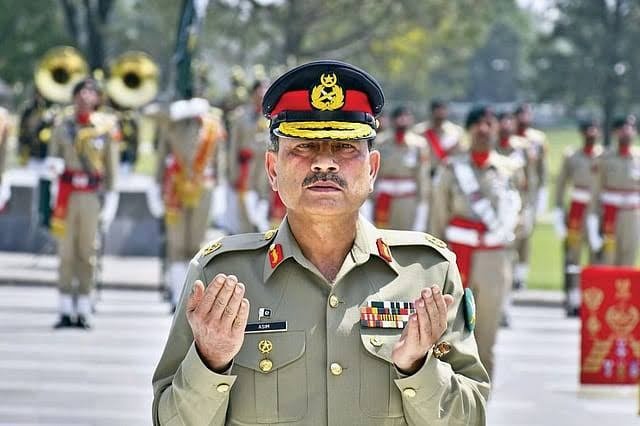
Asim Munir Biography
Syed Asim Munir is a Pakistani military leader who became one of the most influential figures in Pakistan’s defence and national affairs. He was appointed Chief of Army Staff in November 2022 and was promoted to the rank of field marshal in May 2025 following the military confrontation between Pakistan and India. In December 2025, he was also appointed Chief of Defence Forces, placing him at the head of Pakistan’s unified military command structure.
Munir’s career has included intelligence leadership, senior command appointments and responsibility for Pakistan’s military strategy. His rise has attracted international attention because Pakistan’s armed forces have historically played a significant role in the country’s politics, foreign relations and security decisions. Supporters have praised his leadership during periods of military tension, while critics have raised concerns about the military’s expanding influence over civilian government.
His biography offers insight into the career of an officer whose responsibilities extend beyond conventional military command.
Early Life and Family Background
Syed Asim Munir Ahmed Shah is commonly known as Asim Munir. Public biographical accounts place his birth in Pakistan in 1968, although a precise birth date and detailed information about his childhood have not been consistently established in authoritative public records.
He grew up in a country where national security has been shaped by its relationship with neighbouring India, internal security challenges, political instability and its strategic position in South Asia. These circumstances provide important context for understanding the military environment in which he built his career, although they do not establish his personal motivations or private beliefs.
Information about Munir’s parents, siblings and wider family remains limited in reliable public reporting. He has generally maintained a relatively private personal profile compared with the public attention surrounding his military responsibilities. Consequently, unverified claims about his relatives or childhood should not be treated as established facts.
Education and Entry into the Military
Munir pursued a military career through Pakistan’s officer-training system. He received professional military education and underwent the training required to serve as a commissioned officer in the Pakistan Army.
Military education in Pakistan combines leadership development, operational preparation, strategic studies and instruction in command responsibilities. Officers progress through further training and appointments as they gain experience. Munir’s subsequent rise to senior command positions reflects a career spent in this professional system.
Public accounts of his education and military training sometimes contain differing levels of detail. Specific claims about individual institutions, graduation dates or academic qualifications should therefore be checked against authoritative military records before being presented as definitive.
His career eventually brought him into intelligence, a field that requires the assessment of security threats, the management of sensitive information and the coordination of intelligence activities.
Asim Munir’s Military Career
Early military service
Munir began his career as an officer in the Pakistan Army and advanced through successive command and staff appointments. As with other senior officers, his professional development involved responsibilities that extended from unit leadership to broader organisational and strategic duties.
A military career of this kind requires experience in personnel management, operational planning, discipline, intelligence assessment and coordination between different branches of the armed forces.
Leadership in military intelligence
One of the most significant stages of Munir’s career was his work in Pakistan’s intelligence establishment.
He served as Director-General of Military Intelligence before becoming Director-General of Inter-Services Intelligence, commonly known as the ISI, in 2018. The ISI is Pakistan’s principal inter-services intelligence agency and plays a major role in national security and intelligence assessments.
His appointment as ISI chief placed him in a position involving sensitive security matters, relations with other state institutions and assessments of regional developments. He served in the position for a relatively short period before being replaced in 2019.
Leadership of an intelligence agency is difficult to assess solely through public information because much of its work is confidential. Nevertheless, the appointment formed an important part of Munir’s professional history and preceded his eventual rise to the army’s highest command.
Commanding a corps
Munir later served as commander of the Gujranwala Corps, a major Pakistan Army formation. Corps-level command involves supervising large formations, maintaining operational readiness and coordinating military resources across assigned areas.
He also held senior staff responsibilities, including service as Quartermaster General at Army Headquarters. Such positions expose officers to the administrative and logistical demands of maintaining a large military organisation.
These assignments contributed to the experience he brought to the army chief’s office in 2022.
Appointment as Pakistan’s Chief of Army Staff
In November 2022, Pakistan appointed Munir Chief of Army Staff, succeeding General Qamar Javed Bajwa. The appointment was formally announced by the presidency on 24 November 2022.
The army chief is one of Pakistan’s most consequential public offices. The military is responsible for national defence, but its influence has also extended into foreign policy, domestic security and political affairs throughout the country’s history.
Munir assumed command during a period of political division, economic pressure and security concerns. Relations between the military and supporters of former prime minister Imran Khan became a major issue in Pakistani public life. The military’s relationship with civilian political parties and elected institutions remained a subject of intense debate.
As army chief, Munir became a central figure in decisions affecting military readiness, counterterrorism, relations with neighbouring states and Pakistan’s wider international partnerships.
India-Pakistan Conflict and Promotion to Field Marshal

In May 2025, Pakistan and India experienced a serious military confrontation following a deadly attack in Indian-administered Kashmir and India’s subsequent military action against targets in Pakistan and Pakistan-administered territory. Both countries exchanged attacks before a ceasefire was announced.
Munir was Pakistan’s army chief during the confrontation. Pakistan’s government credited the armed forces with defending the country’s territory, while India presented its operations as a response to terrorism. The two governments offered competing accounts of the military outcome, making it important to distinguish official claims from independently established facts.
On 20 May 2025, Pakistan announced Munir’s promotion to field marshal. President Asif Ali Zardari and Prime Minister Shehbaz Sharif formally presented him with the field marshal’s baton at a ceremony on 22 May.
Field marshal is an exceptionally senior military rank. Munir’s promotion was particularly significant because it made him one of the very few Pakistani officers to hold the rank.
The promotion strengthened his public standing among supporters of the military’s response to the confrontation. It also intensified debate about the military’s political position and the balance of authority between the armed forces and civilian institutions.
Appointment as Chief of Defence Forces
In December 2025, Munir was appointed Pakistan’s first Chief of Defence Forces under a restructured military command arrangement, while continuing as Chief of Army Staff. The presidency announced that the appointment would run for five years.
The new position placed him in a wider command role covering the country’s armed services. It represented a significant change in the organisation of Pakistan’s military leadership.
The expanded command structure also became part of a broader debate about constitutional changes, civilian oversight and the concentration of military authority. Reporting in October 2026 described further changes affecting Munir’s powers and tenure, as well as criticism from analysts who argued that the military’s growing influence could weaken parliamentary oversight. The military and its supporters have presented national security and coordination as central considerations.
Role in Pakistan’s Foreign Relations and Security Policy
Pakistan’s army leadership has long influenced relations with India, Afghanistan, China, the United States and Gulf countries. Munir’s tenure has continued that pattern, with security cooperation and regional diplomacy forming important parts of his public role.
In 2026, Pakistan’s military leadership was involved in diplomatic efforts connected with regional tensions and discussions involving the United States and Iran. Munir’s international profile grew as Pakistan sought to position itself as a participant in regional mediation and security arrangements.
He has also been associated with the Special Investment Facilitation Council, a civil-military initiative established to coordinate investment proposals and encourage economic activity. His involvement in such bodies illustrates how the military’s responsibilities in Pakistan can extend into areas traditionally associated with civilian administration.
However, the influence of military leaders over economic policy and diplomacy remains controversial. Supporters argue that military involvement can improve coordination and stability, while critics question whether these responsibilities should be exercised under stronger civilian and parliamentary supervision.
Awards, Honours and Recognition
Munir received the Nishan-e-Imtiaz (Military), one of Pakistan’s prominent military honours. His promotion to field marshal in 2025 was another defining milestone in his career.
The field marshal rank was conferred following the 2025 confrontation with India, with the government citing his leadership during the crisis. The decision was a matter of national significance, but assessments of its merits differ according to political and institutional perspectives.
It is useful to distinguish formal honours from broader public judgments about a military leader. Awards establish official recognition; they do not, by themselves, settle debates about policy decisions, military outcomes or the appropriate role of the armed forces in a democracy.
Personal Life, Wife and Children
Munir keeps much of his family life away from public attention. Information about his wife and children is limited, and detailed personal claims circulating online are not always supported by reliable reporting.
His public responsibilities require extensive attention to military affairs, national security and official engagements. Beyond those duties, there is insufficient consistently verified information to provide a detailed account of his private routine, family relationships or personal interests.
A responsible biography should not fill these gaps with rumours or assumptions.
Controversies and Criticism
Munir’s tenure has coincided with disputes over the military’s relationship with political parties, the treatment of political opposition and the role of security institutions in public life.
Supporters regard a strong military command as necessary for Pakistan’s defence and stability, particularly given the country’s security challenges. Critics, including opposition figures and analysts, have argued that the military has accumulated excessive influence over elected institutions and political competition.
The military has rejected accusations that it improperly controls civilian politics. These disagreements form part of a larger national debate about democratic accountability, constitutional authority and civil-military relations.
Munir’s expanded responsibilities following the creation of the Chief of Defence Forces position have made these questions more prominent. Any assessment of his legacy will therefore need to consider both his military command and the institutional consequences of the changes made during his tenure.
Asim Munir’s Current Position in 2026
As of October 2026, Munir serves as Pakistan’s Chief of Defence Forces and Chief of Army Staff. His position gives him a central role in military command, defence policy and national security planning.
His responsibilities also place him at the centre of continuing discussions about Pakistan’s regional security, foreign relations and the boundaries between military and civilian authority.
Future assessments of his tenure will depend on developments in Pakistan’s relations with neighbouring countries, internal security, economic policy and the strength of civilian oversight.
Legacy and Influence
Asim Munir’s career reflects the influence of Pakistan’s military institutions on national affairs. His progression from intelligence leadership to army chief and then field marshal and Chief of Defence Forces marks a significant rise through the country’s military hierarchy.
His supporters are likely to emphasise his command during the 2025 confrontation with India and his role in strengthening military coordination. Critics are likely to focus on the concentration of authority and the implications for civilian government.
His lasting place in Pakistan’s history will depend not only on military decisions but also on how the country manages its security needs alongside constitutional government, political accountability and regional stability.
Frequently Asked Questions About Asim Munir
1. Who is Asim Munir?
Asim Munir is a senior Pakistani military officer who serves as Chief of Defence Forces and Chief of Army Staff. He became army chief in November 2022 and was promoted to field marshal in May 2025.
2. How old is Asim Munir?
Public biographical accounts commonly place his birth in 1968. On that basis, he is approximately 57 or 58 years old in 2026, depending on his birthday. His precise birth date is not consistently documented in authoritative public sources.
3. Where was Asim Munir born?
He is Pakistani. Detailed, authoritative public information establishing his exact birthplace is limited, so specific claims should be treated cautiously.
4. What is Asim Munir’s educational background?
He received military education and professional officer training through Pakistan’s military system. Detailed claims about individual qualifications and graduation dates should be verified against official records.
5. When did Asim Munir become Pakistan’s army chief?
He was appointed Chief of Army Staff in November 2022, succeeding General Qamar Javed Bajwa.
6. Why was Asim Munir promoted to field marshal?
Pakistan’s government promoted him in May 2025 following the military confrontation with India. The government cited his leadership during the crisis.
7. What is Asim Munir’s current military position?
As of October 2026, he holds the positions of Chief of Defence Forces and Chief of Army Staff.
8. Did Asim Munir head Pakistan’s intelligence agency?
Yes. He served as Director-General of Inter-Services Intelligence in 2018 and 2019, after previously holding a senior military intelligence position.
9. Is Asim Munir married?
Public accounts identify him as a married man, but detailed and consistently verified information about his family is limited. His private life is not extensively documented.
10. Why is Asim Munir an important figure in Pakistan?
He commands the country’s military leadership and has significant responsibilities in defence and security policy. His expanded position has also made him central to debates about civil-military relations and constitutional oversight.
More in Public Figures
 Keanu Reeves Biography, Age, Wife and Net Worth
 Sardar Abdul Rehman Khetran Biography: Political Career, Balochistan Cabinet and Recent Controversy
 Shehbaz Sharif Biography: Age, Political Career, Premiership and Leadership of Pakistan
 Usher’s Atlanta Mansion: Art Collection, Family Home and Luxury Lifestyle